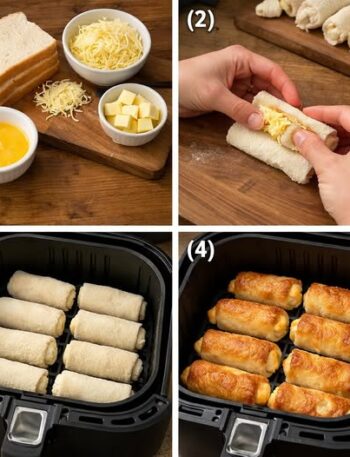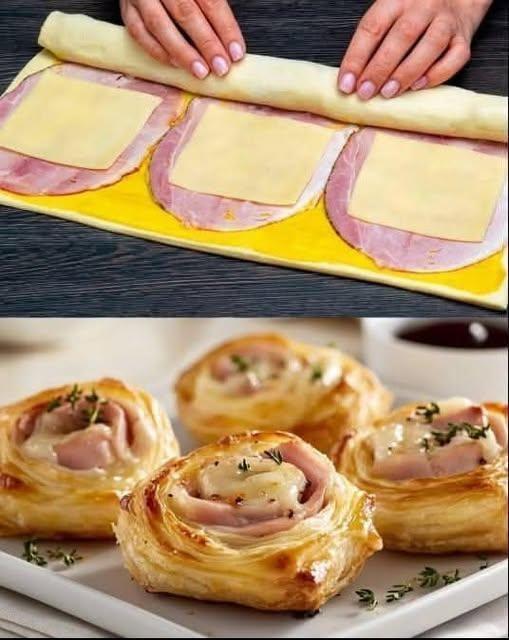
Puff Pastry Ham & Cheese turnouts stand as one of the most iconic, timeless, and universally beloved bakery creations enjoyed across countless cultures and appreciated by food enthusiasts everywhere. The immense popularity of this savory pastry stems from its remarkable contrast of textures—featuring a deeply satisfying, ultra-flaky and shatteringly crisp exterior crust paired harmoniously with an incredibly tender, moist, and savory interior filling layer. A beautifully arranged basket of freshly prepared, golden-brown turnovers serves as the magnificent centerpiece for slow weekend mornings, relaxed family afternoon teas, festive outdoor picnics, high-energy game night celebrations, holiday brunches, comforting midnight snacks, or quite simply whenever an exceptionally savory, high-quality baked good is desired.
Unlike mass-produced, pre-packaged commercial frozen options often found in grocery store freezer aisles, crafting homemade ham and cheese turnouts at home grants the baker absolute autonomy and meticulous control over every single component of the pastry. This includes the precise selection of premium deli cuts, the adjustment of seasoning depth, the customization of the rich cheese filling, and the monitoring of oven temperatures to achieve the ultimate lofty expansion of the pastry layers. The inherent richness and robust flavor profile of well-incorporated melted cheese and savory ham eliminate the necessity for heavy spreads, allowing the true craftsmanship of the laminated dough to take center stage. This remarkably thorough, highly comprehensive guide walks you through every individual stage of the preparation process in extensive detail, from selecting the finest ingredients at the market to achieving the ultimate golden presentation on your serving table.
Introduction
Turnovers belong to a distinguished and celebrated global tradition of laminated pastry baking designed to achieve a light, airy crumb through proper fat layering and controlled heat expansion cycles. Most modern savory variations utilize a combination of premium smoked ham and a low-moisture melting cheese core, which reacts beautifully during the baking cycle, creating localized pockets of rich, stretchy flavor within the pastry walls. These crisp baked goods have been refined over centuries through various global culinary influences and continue to maintain their status as one of the most frequently ordered and widely consumed comfort foods on earth.
The secret to a perfect puff pastry turnover lies in the expansion of the laminated fat matrix. Because the dough contains hundreds of alternating layers of chilled solid butter, it creates pockets of steam as it bakes, forcing the pastry upward into delicate, distinct crystalline sheets. At the exact same moment, the encased cheese reaches its melting point, fusing cleanly with the savory ham layers without leaking out onto the baking sheet. The resulting baked good is wonderfully rich, deeply savory, and exceptionally comforting to individuals of all culinary preferences.
Preparing these ultimate Puff Pastry Ham & Cheese turnouts requires only a small selection of readily available pantry staples, standard baking implements, and a straightforward chronological workflow. Even individuals who are completely new to home baking can confidently master this recipe and execute it with flawless success by following the comprehensive structural breakdown provided below.
Yield
This extensive recipe is formulated to produce approximately ten to twelve large, bakery-quality individual puff pastry turnouts, making it ideal for hosting gatherings, meal preparation, or large family feasts.
Preparation Time
- Active Preparation Time: 20 minutes
- Chilling & Rest Time: 30 minutes
- Baking Time: 20-22 minutes
- Total Elapsed Time: Approximately 1 hour 12 minutes
Main Ingredients
- 2 packages (4 sheets total) high-quality puff pastry dough (kept completely chilled)
- 2 pounds premium smoked ham (sliced into thin, uniform deli sheets)
- 3 cups Gruyere, Swiss, or sharp Cheddar cheese (freshly shredded block is preferred)
- 1/2 cup Dijon mustard or whole grain mustard (essential for a robust interior flavor foundation)
- 1 large farm-fresh egg (whisked thoroughly for the final wash)
- 2 tablespoons garlic powder
- 1 tablespoon onion powder
- 2 teaspoons freshly cracked black pepper
- 1 bunch fresh Italian flat-leaf parsley (finely minced for presentation)
- 1 tablespoon cold milk (mixed into the egg wash)
Additional Optional Ingredients
- 1 cup grated aged Parmesan cheese (for a savory crust upgrade)
- 2 tablespoons dried Italian seasoning mix
- 1 teaspoon cayenne pepper (for an assertive heat profile)
- 1 teaspoon ground white pepper
- Garlic salt
- Smoked paprika (for a subtle warmth and golden color)
- Coarse sea salt flakes (for sprinkling on top)
- Sesame seeds or poppy seeds
- Honey (for brushing post-bake)
- Finely chopped fresh chives
Equipment Required
- Extra-large heavy-duty wooden rolling board or clean marble countertop
- Professional-grade pastry wheel or sharp chef’s knife
- Silicone pastry brush
- Precision measuring cups
- Precision measuring spoons
- Large baking sheets lined with clean parchment paper
- Wire cooling racks
- Absorbent heavy kitchen paper towels
- Elegant presentation serving baskets or platters
Choosing the Perfect Ingredients
The foundational quality of your raw ingredients exerts a direct, unyielding influence on the final texture and flavor of the turnovers. Selecting the absolute finest components from your market is an essential first step.
High-quality puff pastry sheets should feel cold, supple, and display uniform borders without any dry, cracked edges. It is critical to select a dough crafted with pure sweet cream butter rather than vegetable shortening, as butter builds a vastly superior flaky structure and rich aroma during baking. The ham cuts must be completely fresh, displaying a clean pinkish hue and an absence of excessive water retention or artificial slickness.
Examine the cheese selection closely. Aged Gruyere, sharp Swiss, or block cheddar are ideal. It is vital to use freshly shredded cheese from a block rather than pre-shredded packages, as blocks melt into a concentrated, gooey core that stretches beautifully without introducing unwanted anti-caking starches to the pastry layers.
Avoid purchasing low-fat dairy alternatives, wet lower-quality deli hams, or pre-shredded cheese packages that disrupt dough binding.
Cleaning and Prepping the Components
Proper handling and setup ensure a smooth workflow and the cleanest flavor profile for your final pastry.
- Thoroughly sanitize your hands, the wooden board surface, the baking sheets, and all surrounding countertops before introducing the raw baking ingredients.
- Gently pat each individual ham sheet dry using clean paper towels to eliminate excess surface moisture that might steam inside the pastry and make the inner layers soggy.
- Meticulously wash the fresh parsley under cool running water, shaking away any excess liquid completely. Pat it entirely dry using clean paper towels and finely mince the leaves, separating the portion intended for assembly from the portion reserved for presentation.
Thawing and Rolling the Pastry Matrix
This technique is paramount to achieving a perfect, restaurant-quality shatteringly crisp crust that expands dramatically.
- Retrieve your chilled puff pastry sheets from the refrigerator. If frozen, allow them to thaw slowly in the fridge overnight; manipulating frozen pastry causes the butter sheets to break, destroying the lift.
- Dust your clean rolling board lightly with a handful of all-purpose flour.
- Unroll a singular pastry sheet flatly against the center of the board.
- Using a rolling pin, roll the dough gently in outward strokes to smooth any factory creases, maintaining a uniform thickness of approximately one-eighth of an inch across the entire matrix.
Cutting and Filling the Pastry Squares
- Using your pastry wheel or sharp chef’s knife, divide the large pastry sheet evenly into uniform four-by-four-inch squares.
- The Flavor Foundation: Using your silicone brush, paint a thin, even layer of Dijon mustard directly across the center of each square, leaving a half-inch clean border along the perimeter.
- Sprinkle a tablespoon of garlic powder, onion powder, and black pepper across the dry seasoning station.
- Layering the Inclusions: Place a neatly folded sheet of smoked ham over the mustard foundation.
- Top the ham layer with a generous mound of the freshly shredded cheese. Ensure the fillings stay compactly in the center to facilitate proper folding.
Folding and Sealing the Turnovers
Meticulous sealing is key to ensuring the rich cheese filling stays completely encased during baking.
- In a small cup, whisk your farm-fresh egg with a tablespoon of milk to create a wash.
- Using your finger or a small pastry brush, lightly paint the exposed half-inch borders of the pastry square with the egg wash. This moisture acts as a crucial adhesive binder.
- Lift one corner of the pastry square and fold it diagonally over the filling to meet the opposite corner, forming a clean triangle (or fold into a classic rectangle shape).
- Securing the Border: Press the edges together firmly with your fingers. Use the tines of a clean fork to crimp the borders thoroughly along the entire perimeter, creating a permanent, sturdy lock that prevents cheese from leaking onto the sheet. Repeat for all pieces.
Chilling the Assembled Turnovers
Allowing the shaped pastry to rest before introduction to heat relaxes the gluten structures and solidifies the internal butter sheets.
- Arrange the assembled turnovers onto a large baking sheet lined with clean parchment paper, leaving significant space between each piece to allow for airflow.
- Place the entire tray into the refrigerator or freezer for approximately thirty minutes. This cooling period ensures the butter layers contract back to a solid state, guaranteeing an optimal steam release and a dramatic rise in the oven.
The Baking Process
- Preheat your convection oven to 400°F (204°F).
- The Golden Finish Wash: Retrieve the chilled tray. Using your silicone brush, paint the top surface of each turnover with the remaining egg wash. Sprinkle coarse sea salt and cracked black pepper generously over the wet wash for an artistic finish.
- Using a sharp knife, prick two tiny slits into the top center of each turnover to allow internal steam to escape safely.
- Slide the loaded tray into the center rack of the preheated oven and bake at 400°F (204°C) for exactly twenty to twenty-two minutes.
- Monitor the progress through the oven window; the turnovers are done when the puff layers display a magnificent, dramatic rise and a deep uniform golden-brown coloration.
- Remove from the oven and allow them to cool on wire racks for five minutes before serving to maintain ultimate crispness.
Traditional Serving Methods
- Line a rustic woven serving basket with greaseproof checkered wax paper, pile the steaming hot ham and cheese turnouts high in an overlapping formation, and garnish generously with the freshly chopped parsley. Serve immediately while warm alongside an elegant ramekin filled with warm honey mustard dipping sauce.
Elegant Party Presentation
- Arrange the glossy golden pastries in a geometric geometric pattern on a large white porcelain platter, leaving an intentional opening in the center to place a decorative ceramic bowl of spicy fruit chutney. Garnish the perimeter of the display with fresh whole rosemary sprigs for a sophisticated presentation.
Dynamic Flavor Variations
- Spicy Garlic Chili Turnovers: Incorporate a teaspoon of cayenne pepper and crushed red pepper flakes into the mustard layer for an assertive heat profile.
- Zesty Garlic Parmesan Turnovers: Roll the egg-washed pastries directly in finely grated aged Parmesan cheese and dried oregano before baking for a savory crust upgrade.
- Smoky Bacon Fusion Turnovers: Layer crisp bacon bits into the pastry alongside the smoked ham and cheese chunks.
- Herbal Garden Rosemary Turnovers: Use an abundance of finely minced fresh rosemary and thyme leaves instead of parsley for a pleasant herbal aroma.
- Everything Bagel Crunch Turnovers: Brush the tops with egg wash and apply a heavy coating of traditional “Everything Bagel” seasoning over the wedges before baking.
- Sweet Honey Glazed Turnovers: Brush the finished hot pastries lightly with a warm mixture of pure clover honey and melted butter for a sweet-and-savory contrast.
- Loaded Jalapeño Popper Turnovers: Tuck a slice of fresh jalapeño and a dollop of cream cheese inside the pastry square along with the cheddar block.
- Golden Ginger Umami Turnovers: Introduce gentle warmth and complexity by adding half a teaspoon of dry ginger powder and white pepper to the dry flour dusting.
- Crisp Cucumber Accompaniment Side: Serve these hot, rich pastries alongside an incredibly cooling side salad composed of thinly sliced English cucumbers and fresh garden mint.
- Tropical Ham Pineapple Turnovers: Tuck a thin slice of dehydrated pineapple into the core layer for a classic sweet-and-savory combination.
Nutritional Information
Freshly prepared homemade puff pastry turnouts naturally provide a rich source of:
- High-quality dietary protein
- Calcium and Phosphorus (derived from the extensive cheese and dairy content)
- Essential amino acids
- Vitamin A and B-complex vitamins
- Potassium and Magnesium
- Dietary energy (derived from the pastry matrices and healthy fats)
The exact micro and macronutrient distribution varies depending on the specific cheese maturity and pastry fat brands selected.
Common Culinary Mistakes
- Utilizing warm or room-temperature pastry sheets, which melts the interior butter layers and eliminates the signature flaky rise.
- Failing to crimp and seal the dough seams tightly with a fork, causing the cheese to leak out completely onto the baking sheet.
- Using pre-shredded packaged cheeses that contain anti-caking coatings, which ruins the smooth melting profile.
- Baking in an oven that has not been properly preheated, causing the pastry to melt flatly without expanding.
- Skipping the mandatory chilling phase after assembly, which results in a dense, heavy, and compact pastry texture.
- Leaving excessive water moisture on the ham slices, which turns the interior pastry core soggy.
- Crowding the baking sheet with no space between pieces, which blocks hot air circulation and leaves the borders raw.
- Over-baking the turnouts for an excessive duration, which completely depletes the internal moisture and dries out the crumb.
- Leaving the baked pastries on the flat hot baking tray for hours, causing the bottoms to trap steam and soften.
Storage Guidelines
- Allow any leftover turnouts to cool completely to room temperature on a wire rack for approximately twenty minutes.
- Transfer the cooled pastries into a clean, heavy-duty, airtight storage container, sealing it tightly to preserve freshness.
- Store the container securely in the refrigerator for up to forty-eight hours to ensure optimum quality.
- To restore the signature bakery crispness and gooey cheese core, reheat the turnouts in a preheated oven or air fryer at 350°F (177°C) for three to five minutes; avoid utilizing a microwave, as this softens the outer crust permanently.
Freezing Instructions
- Fully shaped, uncooked ham and cheese turnouts can be frozen smoothly for future convenience.
- Arrange the raw pastries in a single layer on a baking sheet and freeze for two hours until solid, then transfer into heavy-duty zipper bags.
- Store in the freezer for up to three months, and bake directly from a frozen state at 380°F (193°C) for twenty-four to twenty-six minutes, adding an extra few minutes to the standard duration without thawing.
Creative Uses for Leftover Turnovers
- Slice the leftover turnout horizontally and utilize it as an exceptionally rich base for a savory breakfast egg sandwich.
- Chop the stale turnouts into uniform cubes and toast them in a pan with butter to create rich croutons over hot tomato soup.
- Crush the leftovers into a savory bread pudding or potato casserole bake topping.
- Layer inside lunchtime panini presses alongside extra greens.
- Dice finely and fold into savory breakfast egg scrambles or omelet structures.
Party Serving Suggestions
- Prepare the extensive batch of turnouts entirely through the shaping and freezing stage ahead of time, keeping the pieces frozen until ready to bake.
- Execute the baking process right before serving to ensure every guest receives a piping hot, fragrant pastry with an ultimate cheese aroma.
- Establish a visually stunning, self-service station featuring the warm turnouts alongside small bowls filled with honey mustard, garlic spreads, or ranch.
- Provide small individual serving baskets or cloth napkins to allow guests to easily handle their pastries while socializing.
- Balance the inherent richness of the savory dairy by placing refreshing platters of fresh vegetable sticks nearby.
- Utilize clean tongs and sophisticated displays to ensure a highly hygienic and professional dining environment.